Welcome to the Mathematical World!
Thābit ibn Qurrah
Polymath of Mathematics, Astronomy, and Mechanics in the Islamic Golden Age
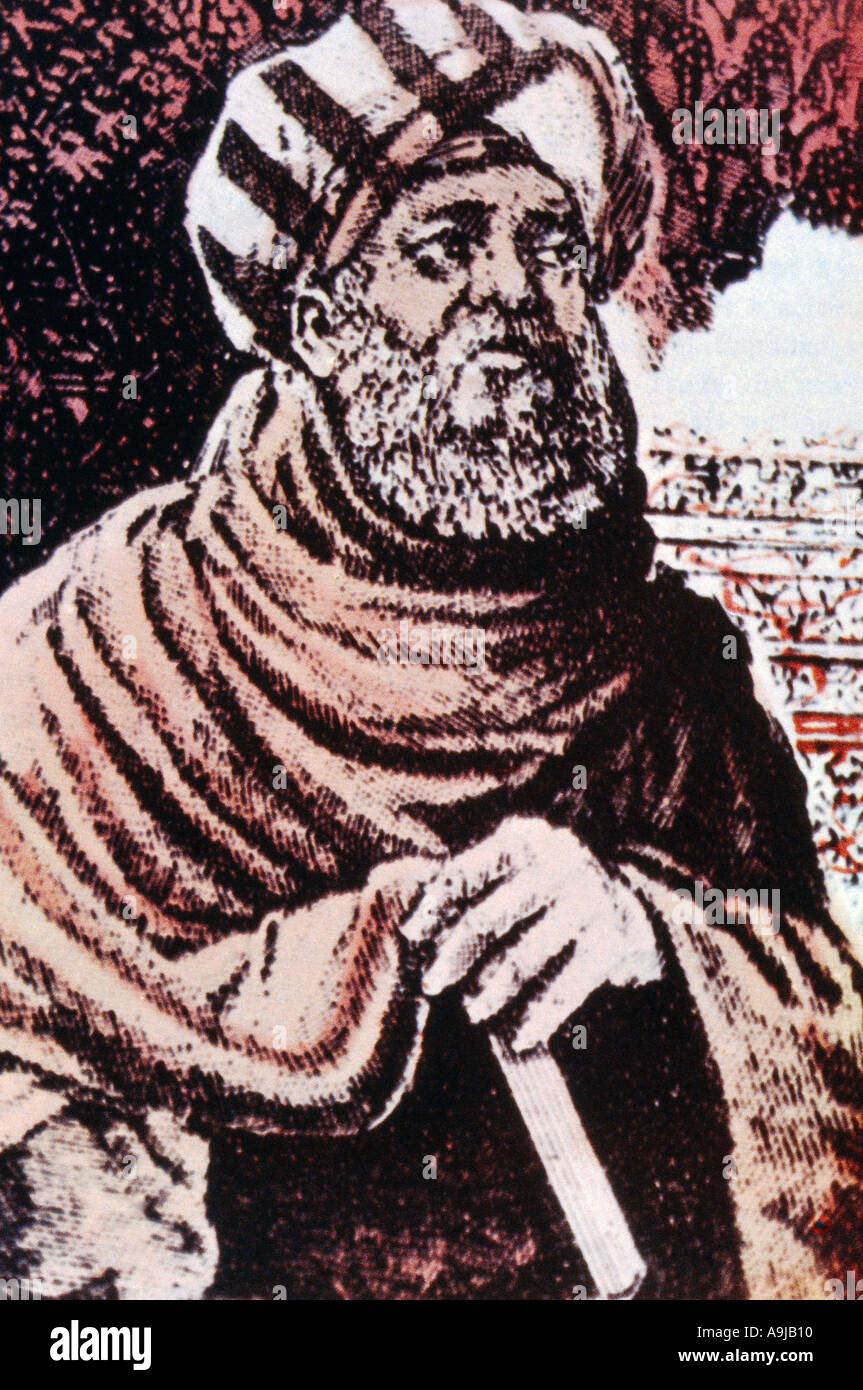
Thābit ibn Qurrah (c. 826/836 – 19 February 901 CE) was an Arab Sabian scholar from Ḥarrān, active in Baghdad during the mid-Abbāsid era. Renowned as a mathematician, astronomer, physician, translator, and philosopher, he worked under the patronage of the Banu Musa brothers and later served as court astronomer to Caliph al-Muʿtadid.({index=0}])
Translation Efforts and Greek Legacy
Thābit translated and revised critical Greek works into Arabic—including those of Euclid, Archimedes, Apollonius, and Ptolemy—laying the foundations of Arabic mathematical terminology and preserving texts lost to the Latin West.({index=1}])
Key Mathematical Contributions
- Developed a rule for generating amicable numbers, such as the pair 17,296 and 18,416.({index=2}])
- Proved a generalization of the Pythagorean theorem using decomposition techniques.({index=3}])
- Advanced geometry through Menelaus' theorem and solvable formulations of conic sections and paraboloid volume—early hints of integral methods.({index=4}])
- Engaged with the concept of mathematical infinity, reasoning about the equivalence between even and odd integers—arguably one of the earliest explorations of infinite sets.({index=5}])
Astronomy and Mechanics
Thābit reformed Ptolemaic astronomy, contributed to theories of trepidation (oscillatory motion of the equinoxes), and accurately estimated the sidereal year as 365 d 6 h 9 m 12 s.({index=6}]) He also authored treatises on sundials and spherical trigonometry, applying Menelaus-type theorems to celestial calculations.({index=7}])
Practical Writings and Mechanics
He composed practical works, including studies on balances and weights—Kitāb fī al-Qarastūn (On the Steelyard) presents a geometric analysis of the balance scale’s mechanics, while other writings on lenses, weights, and optical phenomena reflect his experimental acumen.({index=8}])
Legacy and Influence
- Instrumental in transmitting Hellenistic scientific knowledge and establishing formal mathematical language in the Islamic world.({index=9}])
- Laid groundwork for developments in number theory, statics, astronomy, and mathematical physics in medieval Islamic and later European scholarship.({index=10}])
- Fathered a scholarly lineage: his son Sinān and grandson Ibrāhīm ibn Sinān continued the family's legacy in mathematics and science.({index=11}])

All rights reserved by the Mathematical Unity
Contact: +8801400044645
Email: mathematicalhorse1453@gmail.com
Our Discord Server: Mathematical Unity [Ulus Riyadiyat]